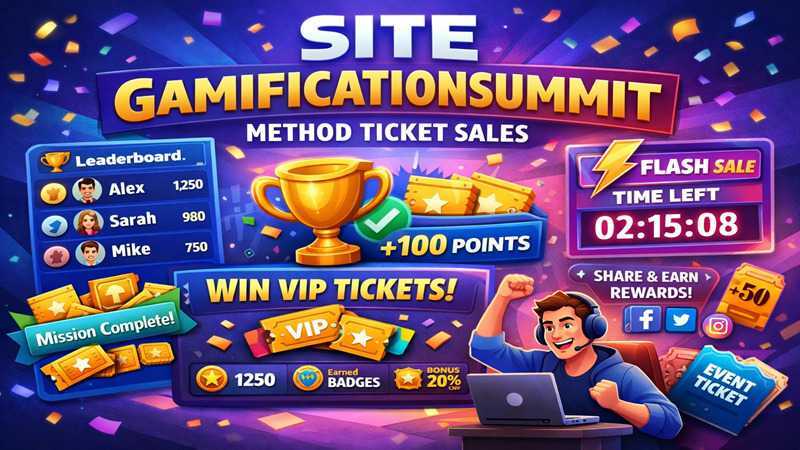
Modern audiences no longer respond to plain “Buy Now” buttons. They expect excitement, recognition, and interaction. The site gamificationsummit method ticket sales approach answers that expectation by transforming traditional ticket purchasing into an engaging, game-inspired experience.
Instead of asking users to simply complete a transaction, this method encourages them to participate in quests, unlock achievements, and compete for rewards. As a result, event organizers increase engagement, build stronger communities, and drive higher ticket sales.
In this guide, you will learn exactly how the site gamificationsummit method ticket sales works, why it delivers measurable results, and how you can implement it effectively for your own event platform.
What Is the Gamification Summit Method?
The Gamification Summit Method applies proven game-design elements—such as points, badges, leaderboards, challenges, and rewards—to the ticket-buying journey.
Rather than treating checkout as a routine step, this strategy turns the process into a mission. Buyers feel like they earn progress, unlock status, and achieve recognition. This shift changes psychology. People move from “spending money” to “winning rewards.”
Most importantly, this method taps into three powerful human motivations:
-
Competition
-
Recognition
-
Exclusivity
When you combine these motivators with secure and seamless checkout systems, you create a ticket sales engine that encourages repeat interaction and long-term loyalty.
Why Gamification Works in Ticket Sales
Gamification works because it activates behavioral triggers that traditional marketing often ignores.
1. It Builds Emotional Engagement
When users earn points or badges, they feel accomplishment. That emotional response strengthens brand connection. Engaged buyers return more frequently and recommend events to others.
2. It Increases Conversion Rates
Gamified systems reduce hesitation. For example, if users see they are “only 20 points away” from unlocking VIP perks, they complete purchases faster.
3. It Creates Social Momentum
People love sharing achievements. When attendees post their rank, badge, or early-access status on social media, they generate organic promotion.
4. It Encourages Loyalty
Traditional ticket sales often focus only on one event. However, gamification creates ongoing participation. Buyers accumulate status over time, which encourages repeat attendance.
Core Principles Behind the Site Gamificationsummit Method Ticket Sales
To apply this method effectively, you must understand its foundational pillars.
Turning Purchases Into Quests
Instead of offering a simple checkout page, structure the process as a mission. For example:
-
“Complete Your Summit Quest”
-
“Unlock Gold Status”
-
“Finish Your Registration Challenge”
By reframing purchasing as progress, you change perception. Buyers feel achievement instead of expense.
Incentive-Driven Purchases
Offer meaningful rewards to motivate early action:
-
Early-bird badges
-
Exclusive networking access
-
Digital collectibles
-
Limited-edition event merchandise
When buyers see clear incentives, they act faster.
Creating Urgency (FOMO)
Fear of missing out drives fast decisions. You can implement:
-
Countdown timers
-
Limited-tier ticket quantities
-
Flash challenges
-
Time-based bonus rewards
These tools encourage immediate action rather than delayed thinking.
Social Proof and Gamified Sharing
Encourage attendees to share their registration success. Offer bonus points or exclusive perks when they post about the event.
For example:
“Share your Gold Ticket status and earn 50 bonus points.”
This approach multiplies exposure organically.
Audience Segmentation
Different audiences respond to different motivators. Segment your buyers into groups such as:
-
Industry professionals
-
Educators
-
Tech enthusiasts
-
Students
Then tailor rewards and messaging accordingly. Personalization increases engagement dramatically.
Promotional Channels That Strengthen the Method
A strong gamified strategy requires powerful distribution channels. The most effective campaigns combine multiple touchpoints.
Targeted Email Campaigns
Design interactive, game-themed emails that feel like invitations to missions.
Instead of writing:
“Buy your ticket now.”
Write:
“Unlock Your Summit Level Today.”
Include progress trackers, countdown timers, and reward previews inside your email templates. This design increases click-through and conversion rates.
Social Media Contests
Launch challenges that encourage participation:
-
Polls about event topics
-
Trivia competitions
-
Behind-the-scenes sneak peeks
-
Referral competitions
Reward winners with ticket discounts or VIP upgrades. These contests build anticipation before ticket release.
Influencer and Ambassador Programs
Partner with industry leaders or creators. Provide them with referral codes and reward their audience with exclusive bonuses.
When trusted voices promote your event, potential attendees feel confident purchasing tickets.
Practical Implementation Guide
Now let’s break the process into actionable steps.
Step 1: Define Clear Objectives
Before implementing gamification, define what you want to achieve:
-
Increase early-bird sales
-
Boost social engagement
-
Improve repeat attendance
-
Expand referral growth
Clear goals guide design decisions.
Step 2: Design a Reward Structure
Choose reward types carefully:
-
Points system
-
Tiered levels (Bronze, Silver, Gold, Platinum)
-
Achievement badges
-
Exclusive perks
Make sure rewards feel valuable and relevant.
Step 3: Integrate Secure Payment Systems
Gamification must never slow down checkout. Integrate fast, secure payment APIs that handle high transaction volumes.
A smooth transaction protects trust and keeps the game flowing.
Step 4: Launch and Monitor
After launching, track:
-
Conversion rate
-
Average session duration
-
Reward redemption rate
-
Social share frequency
-
Referral participation
These metrics reveal what works best.
Step 5: Optimize Continuously
Analyze performance weekly. Adjust point values, reward tiers, and challenge timing to maximize results.
Optimization ensures long-term growth.
Real-World Application Example
Imagine you host a technology summit.
Instead of launching plain ticket sales, you introduce a gamified campaign:
-
Early buyers earn a “Founding Attendee” badge.
-
Referral links provide bonus networking credits.
-
A leaderboard displays top ambassadors.
-
Weekly challenges unlock backstage Q&A access.
As a result, attendees compete for recognition, share their status online, and recruit colleagues. Ticket sales accelerate because buyers see tangible rewards beyond entry.
Tracking and Optimization Framework
Data drives success. Use analytics dashboards to measure performance.
Key metrics include:
-
Conversion percentage
-
Time spent on the ticket page
-
Email open and click rates
-
Social share count
-
Referral-driven purchases
-
Repeat attendee percentage
When you identify high-performing gamified elements, scale them. Remove weak features quickly to maintain simplicity.
Common Mistakes to Avoid
Although the site gamificationsummit method ticket sales offer significant benefits, poor execution can harm results.
Avoid these mistakes:
-
Overcomplicating the checkout process
-
Offering weak or irrelevant rewards
-
Ignoring mobile optimization
-
Failing to communicate rules clearly
-
Neglecting data privacy
Always keep the purchasing path simple and transparent.
Psychological Drivers Behind the Method
Gamification succeeds because it leverages behavioral science.
Competition
Leaderboards trigger competitive instincts. People want to rank higher than peers.
Recognition
Badges and tiers provide visible acknowledgment. Recognition builds pride.
Achievement
Completing missions releases dopamine, reinforcing positive behavior.
Exclusivity
Limited-tier rewards create perceived value and urgency.
By designing campaigns around these triggers, you increase motivation naturally.
Future of Gamified Ticket Sales
The future will introduce even more immersive tools:
-
AI-powered personalization
-
Augmented reality seat previews
-
Blockchain-based digital collectibles
-
Cross-platform reward systems
These innovations will deepen engagement further.
Event organizers who adopt gamification early will lead the industry.
Long-Term Brand Impact
Gamification does more than increase ticket sales. It builds community.
Attendees connect through shared challenges and recognition systems. They feel part of something bigger than a single event.
When you implement the site gamificationsummit method ticket sales strategy properly, you transform customers into loyal advocates.
Conclusion
The digital marketplace demands innovation. The site gamificationsummit method ticket sales strategy provides innovation by merging psychology, technology, and entertainment.
By turning purchases into quests, rewarding early action, creating urgency, encouraging sharing, segmenting audiences, and tracking performance, event organizers unlock exponential growth.
This method does not replace traditional marketing. Instead, it enhances it with engagement-driven design.
If you want to boost conversions, increase loyalty, and build excitement around your event, implement the site gamificationsummit method ticket sales approach today.
Gamification does not just sell tickets.
It builds experiences, communities, and long-term success.
For more info visit GamiFicationSummit